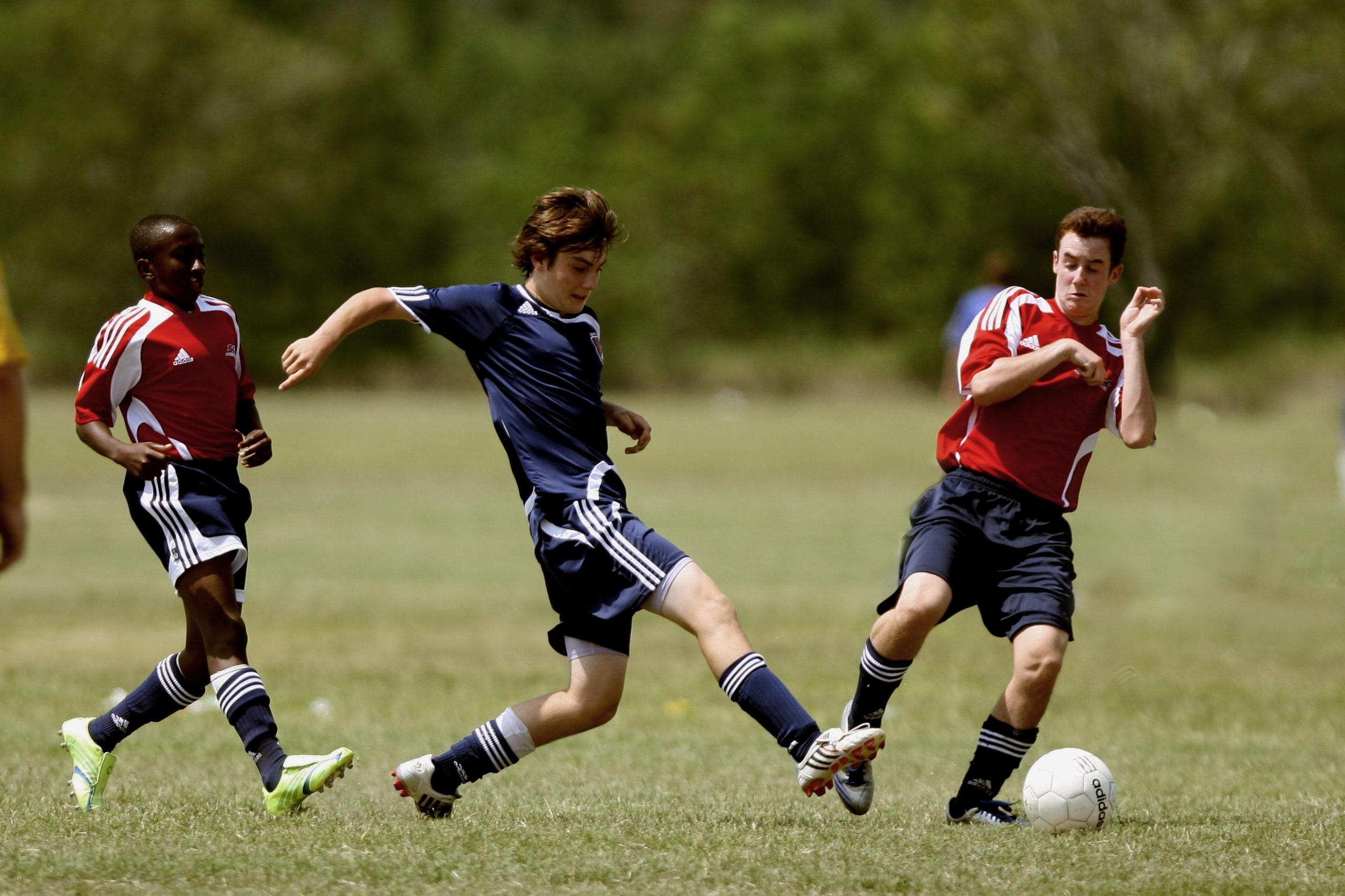
Cómo las reglas de “Targeting” cambian las defensas agresivas

El problema que nadie quiere admitir

En la NFL, la ofensiva ya no es la única que se vuelve sigilosa; las defensas agresivas están siendo forzadas a reescribir sus manuales. Cuando el “Targeting” aparece en la ecuación, el juego se vuelve un tablero de ajedrez sin reglas claras, y los entrenadores se rasgan la cabeza buscando la salida.

¿Qué es “Targeting” y por qué nos vuelve locos?

Es simple: cualquier contacto que pase de la zona de tiro a una zona de bloqueo prohibida se considera “Targeting”. La NFL lo diseñó para proteger a los receptores, pero el efecto colateral es una defensa que ya no puede lanzar golpes a la altura del pecho sin temer una sanción de 15 minutos.

Los coordinadores defensivos, con sus mentes afiladas como navajas, ahora deben equilibrar la ferocidad con la precaución. Un tackle suelto que antes era punto de orgullo se ha convertido en una trampa legal. Y aquí está el truco: la línea ofensiva detecta la timidez defensiva y adapta sus bloqueos al instante.

Impacto inmediato en las formaciones

Las formaciones de blitz se vuelven más “suaves”. Los linebackers no pueden lanzarse como toros si el árbitro les grita “hold!” antes de que el quarterback siquiera mire la pelota. El resultado: más coberturas de zona, menos presión directa, y una explosión de rutas curvadas que explotan los huecos creados por la pasividad defensiva.

Los esquemas “Cover 2” y “Tampa 2” resurgen como fantasmas, porque la defensa necesita espacio para respirar sin ser acusada de “Targeting”. Los equipos que antes dominaban con una presión a 100 yardas ahora se ven obligados a jugar a 30, y la diferencia se siente en la tabla de apuestas.

El efecto dominó en la estrategia de apuestas

En apuestasncaafootball.com los analistas ya están ajustando sus modelos. Cada vez que una defensa agresiva sufre una penalización de “Targeting”, el spread se desplaza unos 1,5 puntos. Los traders usan ese dígito como eje para crear líneas de apuestas más ajustadas.

Los apostadores inteligentes no solo miran los números de sacks; vigilan los “Targeting” flags. Un juego con tres penalizaciones de “Targeting” en la primera mitad ya tiene una tendencia a sobrepasar el total de puntos preestablecido.

Cómo adaptarse sin perder la agresividad

La respuesta está en la educación del jugador. Entrenar al defensive end para “tocar y retirar” en lugar de “cargar y mantener” —un movimiento que parece contraintuitivo— permite que la presión siga existiendo sin desencadenar la sanción. Además, los coordinadores deben programar paquetes de blitz que incluyan “zona de seguridad” para que el árbitro no vea un golpe fuera de juego.

En la práctica, se trata de crear “puntos de fuga” dentro del esquema defensivo: un linebacker que se lanza, pero que retrocede antes de tocar al receptor. Así, la defensa mantiene la amenaza, pero el árbitro no grita “Targeting”.

La jugada final

Si tu defensa sigue atrapada en el miedo, suelta el freno y empieza a entrenar ese “toca y suelta”. La liga premiará la astucia, no la timidez. Y la próxima vez que veas una penalización de “Targeting”, simplemente ajusta tu línea de apuesta y deja que la agresión controlada haga el resto.

BVB Fan-Kodex: Die hitzige Diskussion um Toleranz, Tradition und Grenzen

Die Kernfrage

Hier geht es nicht um ein simples „Fans wollen laut sein“. Es ist ein moralischer Brennpunkt, der die Dortmunder Identität auf die Probe stellt. Warum? Weil jedes Wort, das aus der Südtribüne dringt, sofort in den sozialen Medien explodiert, und plötzlich ist das Stadion ein Schlachtfeld für Ideologien.

Was Fans wirklich wollen

Ein kurzer Blick in die Kommentarspalten zeigt: Leidenschaft ohne Limits. Manche feiern das „Wir gegen die Welt“-Mantra, andere fordern klare Grenzen gegen Hass. Kurz gesagt: Der BVB ist das Symbol – aber das Symbol bedeutet für jeden etwas anderes. Die einen sehen den Club als politischen Spielplatz, die anderen als reines Fußball‑Haus.

Die schmalen Gratlinien

Hier wird’s knifflig. Auf der einen Seite steht die traditionelle „Keine Fremdenhass‑Politik“, auf der anderen Seite die Forderung nach „keinem politischen Einschluss“. Fans jonglieren mit beidem, stolpern über Wörter wie „Faschismus“ oder „Solidarität“, die je nach Kontext völlig unterschiedliche Resonanz erzeugen. Und das in einem Umfeld, das bereits über 140.000 Menschen pro Spiel kapazitiv auslasten kann.

Wie der Klub reagiert

Der BVB hat ein eigenes Verhaltens‑Manual veröffentlicht, aber das Dokument wirkt wie ein Flickenteppich aus juristischen Floskeln und emotionalen Aufrufen. Der Vorstand sagt: „Wir stehen für Vielfalt“, und gleichzeitig droht ein Bußgeld für aggressive Choreografien. Das ist, als würde man einen Rasenmäher mit einer Rasierklinge ausstatten – übertrieben präzise, aber kaum praktikabel.

Die Medien- und Social‑Media‑Explosion

Social Media macht den Kodex zur Echtzeit‑Währung. Jeden Tag tauchen neue Memes, Hashtags und viral gehende Videos auf. Ein einzelner Fanpost kann zur Debatte über Diskriminierung führen, bevor das Stadion überhaupt geölt wurde. Und das zwingt den Klub, sofort zu reagieren, sonst verliert er das Vertrauen seiner Basis.

Die Gegenwart im Blick

Aktuell sehen wir drei dominante Narrative: Das „Pure Football“-Narrativ, das „Sozial‑Verantwortungs‑Narrativ“ und das „Rebellion‑Narrativ“. Jeder steht für ein unterschiedliches Verständnis von Fan‑Verhalten. Und das Spannungsfeld zwischen ihnen ist das, was die Diskussion am Brennen hält.

Handlungsaufruf

Hier ist die Lösung, kein Schnickschnack: Der Verein muss einen klaren, nicht verhandelbaren Richtwert setzen – und zwar heute. Keine halbherzigen Kompromisse, keine endlosen Wortgefechte. Jeder Fan muss wissen, wo die Grenze liegt, und das muss sofort im Stadion kommuniziert und online verankert werden. Und wenn du ein Fan bist, dann poste jetzt deine klare Stellungnahme auf dortmundwettquoten.com – und mach keinen Raum für Grauzonen. Stell dich hinter das Wort, das du vertrittst, und setz ein Zeichen. Act now.

Wetten auf Trainerwechsel vor Derby: Risiken und Chancen

Warum Trainerwechsel kurz vor dem großen Duell brisant ist

Der Moment, in dem ein Club den Trainer wirft, ist wie ein Streichholz, das im Sturm durch die Luft fliegt – unvorhersehbar, explosiv, sofort ein Gesprächsthema in den Fanclubs. Gerade vor einem Derby, wo Emotionen kochen, wirkt jede Entscheidung doppelt so stark. Die Quoten sprengen plötzlich das übliche Muster, und das ist das Spielfeld für clevere Wettköpfe.

Die Psychologie des Teams – sofort oder später?

Ein neuer Cheftrainer kann das Team in Aufruhr versetzen oder frisch beleben, je nach Vertrauen und Zeit. Manche Spieler jubeln, andere sind skeptisch, und das spiegelt sich in der Spielweise wider. Die Hälfte der Fans reagiert sofort mit Aggressivität, die andere Hälfte wartet ab – und genau das erzeugt die Schwankungen, die man ausnutzen kann.

Statistische Ausreißer – wo die Zahlen lügen

Statistiken zeigen, dass Trainerwechsel meist zu einer kurzen Aufwärtsbewegung führen. Doch das ist nur die Spitze des Eisbergs. Betrachte die letzten fünf Derby‑Partien, in denen ein Wechsel stattfand: Drei endeten mit einem Unentschieden, ein Sieg für den neuen Trainer, ein klarer Verlust. Der Mittelwert ist irreführend, weil er die Extreme verwischt.

Marktreaktionen – das Bild der Buchmacher

Bookies passen ihre Quoten schneller an, als die Mannschaft das neue System versteht. Das ist das Spielfeld für Profis: Du beobachtest, wie die Quote für ein Unentschieden plötzlich von 2,10 auf 2,85 springt, während das Handicap für den Favoriten schrumpft. Ein kurzer Blick auf wetten-strategie-online.com liefert die Echtzeit‑Daten, die du brauchst.

Timing ist alles – das richtige Fenster finden

Setz nicht zu früh, sonst spielst du gegen die Marktbewegung. Warte, bis das erste Rauschen endet, doch lass dich nicht vom letzten Schuss überraschen. Das ideale Zeitfenster liegt zwischen Ankündigung und offizieller Pressekonferenz – meistens 30‑60 Minuten. In diesem Moment schwanken die Bookies, und du hast das Spielfeld zu deinen Gunsten.

Risiko‑Management – nicht alles aufs Spiel setzen

Ein einziger Tipp auf das Unentschieden kann verführerisch aussehen, aber das ist ein Stolperstein. Teile dein Kapital, setze auf mehrere Märkte: Beide Teams treffen, über/unter 2,5 Tore, oder das erste Tor. So hast du mehrere Anknüpfungspunkte, falls das Team sich erst nach dem ersten Drittel anpasst.

Emotionen zähmen – bleibt kühl, bleibt profitabel

Derby‑Stimmung ist ansteckend, doch dein Verstand muss wie ein Eiskristall bleiben. Vermeide die Falle, weil dein Lieblingsclub gerade den Trainer wechselt. Die besten Gewinne kommen, wenn du das Gegenteil spielst: Setze auf das Team, das als Außenseiter gilt, weil es plötzlich neue Taktiken übernimmt.

Der letzte Schritt: Sofort handeln, wenn die Anzeichen spürbar sind

Siehst du die Quote plötzlich kippen? Dann greif zu. Warte nicht auf den nächsten Tages‑Report. Das ist die Goldgrube, die nur kurze Sekunden hält. Setz jetzt und sichere dir den Vorsprung – denn die nächste Runde ist schon am Start. Handeln ist jetzt dein einziger Befehl.

Hand Sports Injuries

With high rates of sports participation across Sydney’s Eastern Suburbs, hand injuries are a common and often underestimated issue. Whether it’s a quick game of netball at Moore Park, a surf down at Bondi beach, or a competitive AFL match, the hands are constantly at risk of injury or overuse.

Injuries to the hand and wrist or fingers can be frustrating and have a serious impact your ability to work, train, or carry out activities of daily living. Understanding common types of hand injuries and how to manage or prevent them is essential, not just for athletes, but for anyone staying active.

1: Tendon injuries: mallet and jersey finger injuries 

Tendon injuries of the hand are common in sports and should never be ignored.

Jersey finger occurs usually in rugby or AFL, when the fingertip gets caught on an opponent’s jersey, causing a tear in the flexor tendon and making it impossible to actively bend the tip of the finger. Mallet finger affects the extensor tendon and usually results from a direct blow to the fingertip, leaving it drooped despite still being able to bend it downward. Both injuries require prompt assessment, as early splinting or surgical intervention is often needed for the best outcome. Following this rehabilitation through physiotherapy to regain strength, mobility and function is essential.

2: Volar plate injuries 

The volar plate is a thick band of ligament located on the palm side of the finger, providing stability during movement and activity. Injuries to the volar plate typically occur when the finger is forcefully hyperextended (very common in ball sports such as netball and basketball), causing the ligament to overstretch or tear. This often results in pain, swelling, and reduced mobility and strength in the affected finger. Management usually involves a period of splinting or strapping, but early rehabilitation is essential to prevent long-term stiffness and maintain joint function.

3. Distal radius and scaphoid fractures 

Both distal radius (wrist) and scaphoid (bone in the hand close to the wrist) fractures commonly occur after a fall onto an outstretched hand and are particularly common sports such as AFL and rugby.  Wrist fractures are diagnosed with x-ray and typically require a period of immobilisation in a cast. Early diagnosis is crucial for scaphoid fractures, as poor blood supply to the scaphoid can lead to non-union or long-term wrist dysfunction. Management of scaphoid fractures typically involves immobilisation in a thumb splint or cast, and in some cases, surgical fixation may be required to ensure proper healing.

4. Dequervian’s tenosynovitis 

Dequerivian’s tenosynovitis is inflammation of the tissue that covers the tendon that move our thumbs upwards and out to the side. It is commonly caused by repetitive use of the thumb/wrist and can be seen a lot in the tennis playing population. Treatment of Dequervian’s requires a period of immobilisation in a splint for aggravating activities,  followed by a period of strengthening to help build tolerance to higher loads put through the thumb in particular with racquet ball sports

These are just a few of the many hand injuries that can occur in the hand – if you are concerned about any hand injury you may have give us a call on 8068 7737 or book in online at isophysio.com.au or by clicking the button below.
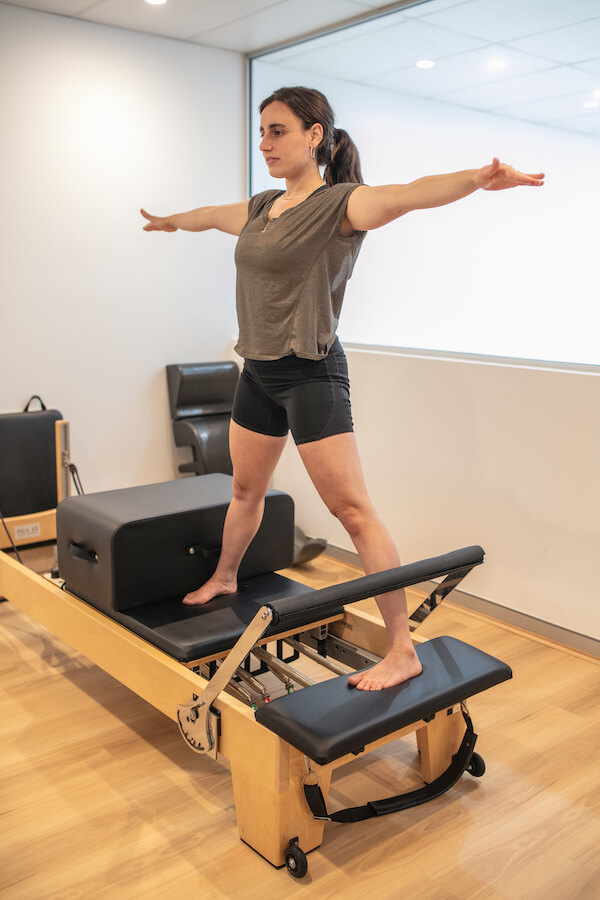
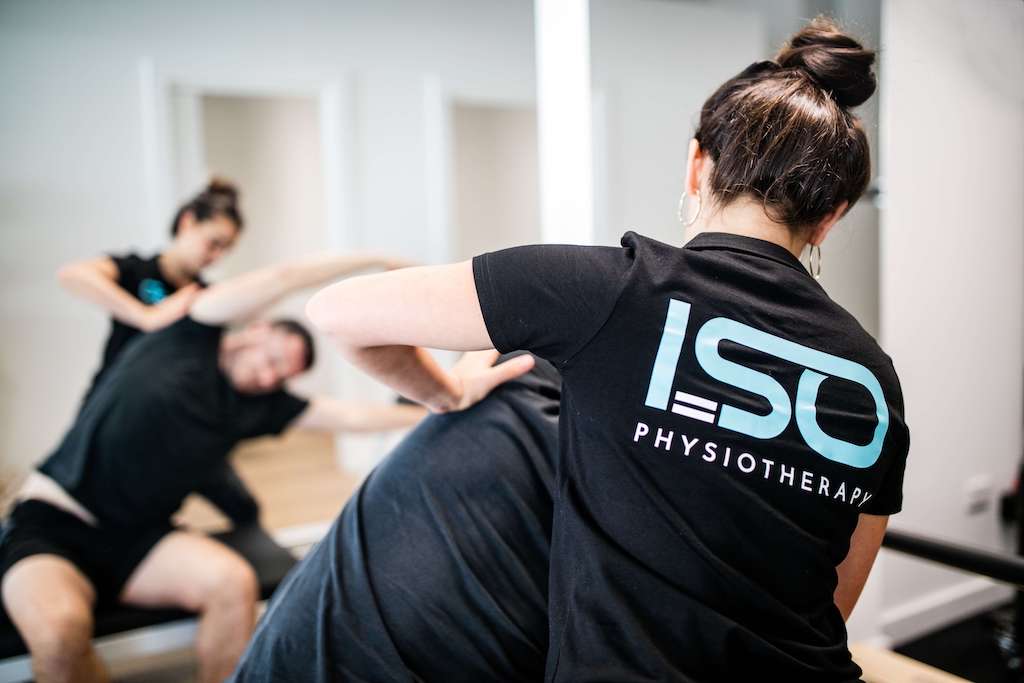
The Benefits of Pilates for Office Workers

Office workers often spend hours hunched over a computer screen with minimal movement breaks. This prolonged posture encourages rounding of the shoulders and forward head position, both of which can contribute to increased pain. These postural habits can reduce spinal mobility and increase the risk of developing musculoskeletal pain, particularly in the neck, shoulders, and back.

Pilates is an effective way to counteract these issues. It promotes better posture, strengthens key postural muscles, and restores mobility throughout the spine and hips. In this blog post, we’ll explore some of the key benefits Pilates offers for those who spend their days at a desk.

Thoracic Mobility

The thoracic spine (mid-back) plays a vital role in allowing flexion, extension, and rotation of the upper body. When we sit in a slouched position for extended periods, this area can become stiff and restricted.

Pilates targets thoracic mobility through both dynamic mobility and muscle activation exercises. These movements help restore movement in the spine while engaging the muscles that support good posture. Improved thoracic mobility can reduce upper back stiffness, relieve tension in the neck and shoulders, and allow for more efficient movement throughout the day.

Core Stability

Strong core muscles are essential for maintaining good posture and supporting the spine. especially during prolonged sitting. Pilates places a strong emphasis on deep core engagement, particularly the transverse abdominis, pelvic floor, and multifidus muscles. By improving core stability, office workers can maintain a more upright posture, reduce strain on the lower back, and move more efficiently throughout their day. It also helps to prevent common desk-related issues like lower back pain.

Hip Mobility

Prolonged sitting shortens and tightens the hip flexors, particularly the iliopsoas muscle, which can lead to reduced hip extension, anterior pelvic tilt, and increased strain on the lower back. Over time, tight hip flexors can affect walking, standing posture, and even cause compensatory patterns in movement.

Pilates incorporates exercises that both lengthen tight hip flexors and strengthen the surrounding hip stabilisers. Movements such as leg circles, bridges, and dynamic hip stretches help to restore mobility and balance around the pelvis. Improving hip mobility not only reduces stiffness and discomfort, but also supports better alignment and overall movement quality.

If you would like to try Pilates with us, give us a call on 8068 7737 or book online at isophysio.com.au or by clicking the button below.
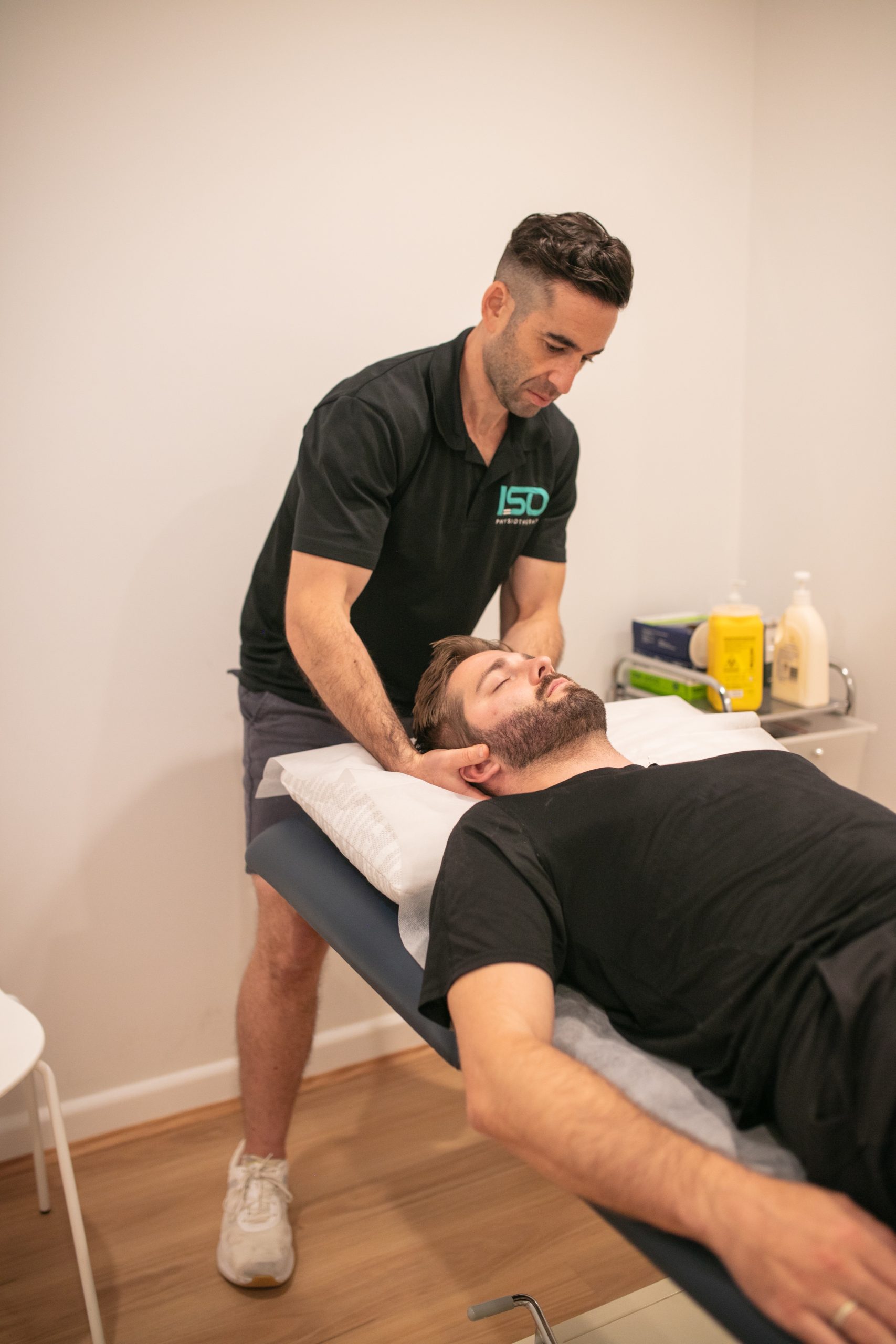
5 Common Causes of Neck Pain and How ISO Physiotherapy Can Help

Neck pain is a prevalent condition that affects millions of people worldwide. It can be caused by various factors, and its impact on daily life can be debilitating. At ISO Physiotherapy, we understand the importance of thorough assessments, personalised treatment plans, and a hands-on approach to effectively address neck pain. In this blog post, we will explore five common causes of neck pain and explain how our specialised approach can help you find relief and regain optimal neck health.

  1. Poor Posture: One of the leading causes of neck pain in today’s sedentary lifestyle is poor posture. Spending prolonged hours sitting at a desk, hunching over electronic devices, or slouching can strain the muscles and joints in the neck. At ISO Physiotherapy, our skilled physiotherapists conduct thorough assessments to identify postural imbalances and develop tailored treatment plans. Through a combination of corrective exercises, ergonomic guidance, and postural re-education, we aim to relieve pain and restore proper alignment
  2. Muscle Imbalances and Weakness: Muscle imbalances and weakness can contribute significantly to neck pain. Imbalances occur when certain muscles become overactive and tight, while others weaken and lengthen. This imbalance can lead to poor movement patterns and increased stress on the neck. Our physiotherapists at ISO Physiotherapy use a hands-on approach to release tight muscles, strengthen weak muscles, and restore balance. By prescribing targeted exercises, stretches, and manual therapy techniques, we can help alleviate pain and improve muscle function.’
  3. Joint Dysfunction: The joints in the neck, known as cervical joints, are susceptible to dysfunction, which can cause pain and restricted movement. Factors such as trauma, degenerative changes, or poor posture can lead to joint dysfunction. At ISO Physiotherapy, we specialise in manual therapy techniques, including joint mobilisations and manipulations, to restore optimal joint mechanics. Our physiotherapists will assess the specific joint involvement and create an individualised treatment plan to improve joint function and reduce pain.
  4. Repetitive Strain Injuries: Engaging in repetitive tasks that strain the neck, such as typing on a computer or using a smartphone, can result in repetitive strain injuries (RSIs). RSIs cause inflammation and irritation of the tendons and muscles in the neck, leading to pain and discomfort. Our team at ISO Physiotherapy will evaluate your work or daily activities, identify any repetitive strain factors, and provide tailored treatment plans. This may involve targeted exercises, ergonomic modifications, and activity modifications to relieve pain and prevent future injuries.
  5. Stress and Tension: High levels of stress and tension can manifest physically, often leading to neck pain. Stress causes muscle tension and tightness, which can result in neck stiffness and discomfort. At ISO Physiotherapy, we adopt a holistic approach to address neck pain caused by stress. Our physiotherapists work closely with our in-house massage therapist and Pilates instructors who can combine manual therapy techniques, relaxation exercises, and stress management strategies to promote relaxation, reduce muscle tension, and alleviate neck pain.

Neck pain can significantly impact your quality of life, but with the right approach, relief is possible. A. Contact ISO Physiotherapy today and take the first step toward a pain-free neck and improved well-being.


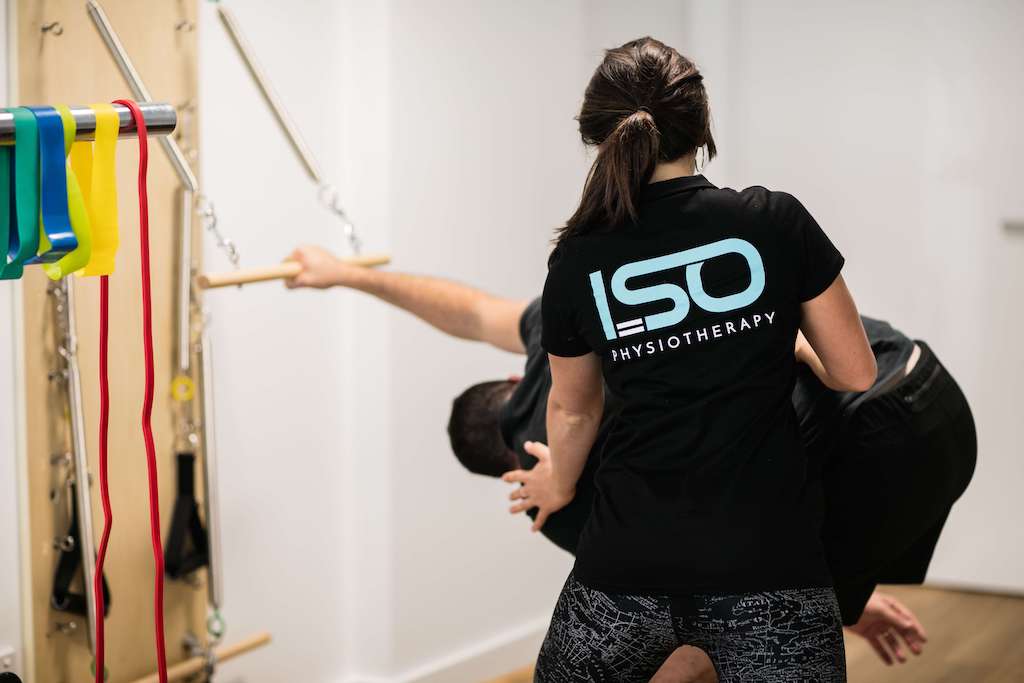
Why to start Clinical Pilates at ISO Physiotherapy

Clinical Pilates is a form of exercise that is designed to help people with specific health conditions or injuries. It is a highly effective way to rehabilitate and prevent further injury, and can be tailored to each individual’s needs. At ISO Physiotherapy, we offer Clinical Pilates sessions that are led by experienced and qualified Pilates Instructors. Here are 5 reasons why you should do Clinical Pilates at ISO Physiotherapy:

  1. Personalised programs At ISO Physiotherapy, we develop personalised Clinical Pilates sessions based on each patient’s individual needs and goals. Our physiotherapists assess each patient’s movement patterns and strength, and design a program that will address their specific areas of weakness and pain.
  2. Expert guidance our Clinical Pilates sessions are led by experienced instructors who are trained in movement assessment. They provide expert guidance and support throughout the program, helping patients to progress safely and effectively.
  3. Evidence-based approach Our Clinical Pilates sessions are based on the latest scientific evidence and research. We use evidence-based techniques to help patients recover from injury and improve their overall physical health.
  4. Focus on rehabilitation Clinical Pilates is a form of exercise that is specifically designed for rehabilitation. It helps patients to recover from injury and build strength and flexibility in a safe and controlled way.
  5. Convenient location and flexible scheduling which allows the patients to choose the times and days that work best for them.

In conclusion, Clinical Pilates is an effective way to rehabilitate and prevent further injury. At ISO Physiotherapy, our personalised programs, expert guidance, evidence-based approach, focus on rehabilitation, and convenient location and scheduling make us an excellent choice for anyone looking to improve their physical health and well-being.

5 Reasons to Start Pilates

Pilates is a low-impact form of exercise that focuses on strength, flexibility, and balance. In this blog, we will discuss the 5 benefits of why Pilates is good for everyone and how at ISO Physiotherapy, our experienced and skilled instructors work with physios to help you achieve your goals.

  1. Improves posture and alignment Pilates emphasises proper alignment and posture, which can help reduce pain and prevent injuries. By strengthening the core muscles that support the spine, Pilates can also improve balance and stability.
  2. Increases strength and flexibility, Pilates target specific muscle groups, including the abdominals, back, hips, and legs, to increase overall strength and flexibility. This can help improve performance in other activities, such as sports or everyday tasks.
  3. Reduces stress and promotes relaxation Pilates incorporates breathing techniques and mindful movement, which can help reduce stress and promote relaxation. This can have a positive impact on mental health and overall well-being.
  4. Helps manage chronic conditions Pilates can be beneficial for people with chronic conditions, such as back pain, osteoporosis, or arthritis. By strengthening muscles and improving flexibility, Pilates can help reduce pain and improve mobility.
  5. Customisable for all fitness levels Pilates can be modified to accommodate different fitness levels and abilities. This makes it accessible to everyone, from beginners to advanced athletes.

At ISO Physiotherapy, our instructors are experienced and skilled in teaching Pilates to people of all ages and fitness levels. They work closely with the ISO Physiotherapists to understand each client’s individual needs and goals, and develop customised programs to help them achieve their desired outcomes.

In conclusion, Pilates is a versatile form of exercise that offers numerous benefits for everyone. Whether you are looking to improve your posture, increase strength and flexibility, reduce stress, manage chronic conditions, or simply improve your overall fitness, Pilates can help.

indoor training

Indoor Training: How to Prevent Injury

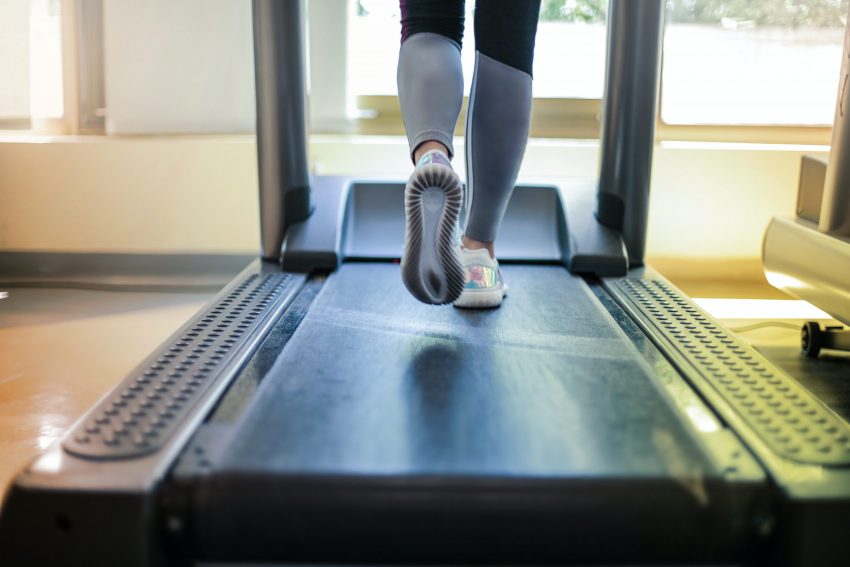
When bad weather strikes, many clubs, people, and gyms take their training inside. For example, soccer clubs are finding indoor courts to practice on, and runners are using the treadmill instead of their usual outdoor sessions. Usually, the training is meant for the outdoors, so moving it to an indoor facility might cause some issues.

What kind of issues? Lately we’re noticing that people who are moving their outdoor training to indoor training are complaining of muscular tightness across their lower backs or legs, which often causes surprise or confusion.

Why is there muscular tightness?

When you have a sudden change in surface during your training, it can affect your body in many different ways. Usually, the change in surface ‘hardness’ causes the body to absorb a larger amount, or different type of, force to what it is used to. This can lead to an overload in certain muscle groups that are found in the legs or the lower back. Similarly, you can also experience tendon or joint injuries due to this change in load.

What can you do to prevent this?

Prevention is better than cure. As physiotherapists, our aim isn’t to cure you, it is to help you properly prepare your body in order to mitigate injury. Rather than treating an injury, we hope to condition your body in order to prevent injury. 

Here are some things you can do to prevent injury if you’re moving outdoor training to indoor training.

  • Make sure you warm up. Include band work for your glutes, as well as muscle activation exercises for your hamstrings, quads and lower back
  • Perform dynamic stretching exercises before you train. This helps prepare the muscles and tendons for higher levels of force
  • Ease into the training session. Starting off soft is a great way to prevent injuring yourself when your body hasn’t warmed up yet. As you progress into your training session, you can increase your intensity
  • Don’t forget the cool down. To do this aim for 3 x 45-60 second holds of your glutes, quads, hamstrings, and calves (just to name a few!)
  • Recover, recover, recover. Recovering between sessions is crucial. This can include strategies like appropriate hydration, adequate sleep (which should generally be 8 hours), having good nutritional intake, and ensuring you have enough rest before your next session

Are you experiencing muscular tightness?

For the next four weeks only, we’re offering Hakoah members and their immediate family 25% off your initial consultation, usually priced at $135. 

If you think you have injured (or might injure) yourself from a change in your training environment, don’t hesitate to reach out to us at ISO Physiotherapy. Head here to book an appointment or call us on 8068 7737 and mention this discount when booking. Visit us before April 13 to take advantage of this offer.


The Benefits of Massages

Believe it or not, massages aren’t just an enjoyable and relaxing pastime, they’re also incredibly beneficial for your body. In fact, certain types of massages incorporate many useful techniques and therapies to ensure your body is maintaining its optimal level of health and wellbeing. 


What is a massage?

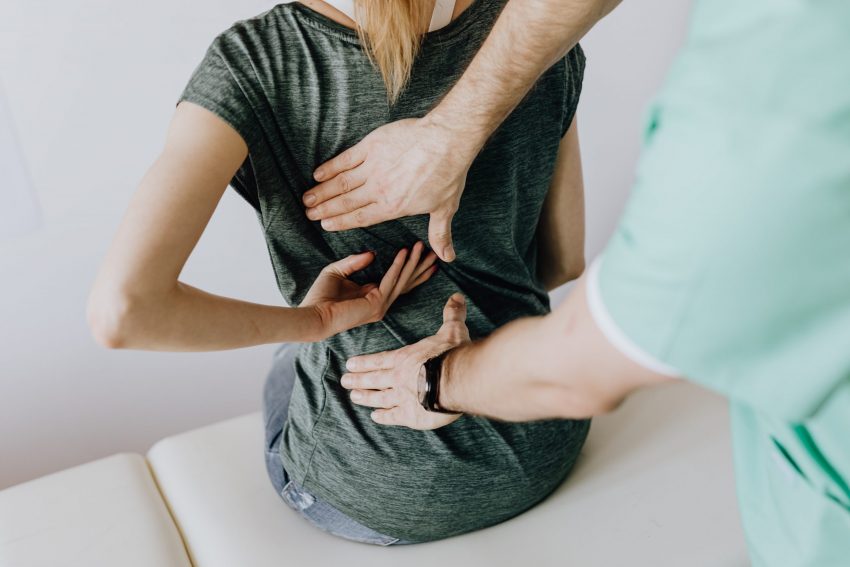
A massage is a form of manual therapy. It uses a hands-on technique that involves the rubbing, pressing and manipulating of the skin, nerves and muscles. There are several types of massage techniques used today including remedial and sports massage. Although these two types of massages differ slightly in technique, they achieve a similar outcome.


What are the physical benefits of massages?

Massages have many benefits including:

  • Reducing pain through reducing muscle tension and soreness
  • Improving blood flow circulation
  • Stimulating joint mobility
  • Reducing stress through reducing the hormones that cause stress
  • Increasing relaxation by releasing of positive endorphins
  • Accelerating the recovery of soft tissue injuries


What physical conditions improve with massages?

Massage can be used to assist with a variety of symptoms and conditions. These include:

  • Muscle strains 
  • Acute injuries
  • Chronic injuries
  • Lower back pain
  • Thoracic pain
  • Cervical pain
  • Headaches
  • Shoulder pain
  • Sports injuries
  • Mispositioned bones
  • Delayed onset muscle soreness (DOMS)

For most conditions, massages are used as an adjunct therapy to assist in the recovery and healing process, and to achieve the common goal of enhancing optimal bodily function.

Do you feel like you could use a massage? Book an appointment with our massage therapist, Vanessa Lenz.