back-to-the-gym

Back to Gym: How to Return Safely

Gyms are back in business and we couldn’t be happier! This is fantastic news for all the gym junkies out there who just can’t wait to get back to training. But this also means, we’re likely to be seeing some accidental injuries.  For many of us, this’ll be the first time we’ve been active in a while so we’ve written up some general pointers about the importance of returning to weight or cardio training as safely as possible, to avoid the risk of injury! Here are some simple things you can do and remember.

Don’t go too hard, too soon

‘Go hard or go home’ does not apply to returning to the gym. It’s been a while since you’ve trained in a gym environment so consider the first couple of weeks as your “re-introduction”.

Weight training

Our advice is 1-2 weeks of full body LIGHTER sessions before you start training specific muscles. Think compound exercises like squats rather than leg extensions, or a machine chest press rather than a dumbbell chest fly. 

Cardio training

Build back into your training by altering speed or distance, not both initially. Our advice would be to aim to build your distance first, then slowly increase your speed over your coming training sessions.

Warm up before you train

We all know the importance of performing an adequate warm up or mobility routine prior to training, but that doesn’t mean we always do it. Warming up is extremely important and should be dynamic (not just static stretching) which can include mobility exercises, muscle activation exercises, or both. If you’re stuck for ideas, please give us a call!

Give yourself rest days

Remember, you likely haven’t done this in a while, so it’s important that you give your body enough time to rest and recover between gym sessions. Our advice would be start training 2 – 3 times a week with rest days in between. Then slowly build your days up over the coming weeks.

Cool down after your session

Cooling down properly after a session is almost as important as warming up. Again, think dynamic and mobility cool down with some static stretching added in.

Keep practicing good hygiene

What was once not a critical factor of returning to the gym, is now more important than ever. Keep yourself and others safe by continuing to use hand sanitiser, as well as washing your hands and sanitising the equipment before and after you use it.    Have questions? Don’t hesitate to reach out to the team at ISO Physiotherapy for any advice on returning to the gym – we’d be happy to help!  If you think you may have injured yourself, don’t hesitate to book in a consultation or give us a call at the clinic. Enjoy the freedom, Your ISO Team
running-with-shin-splints

The Lowdown on Shin Splints

Shin splints are common. Whether you’re a seasoned runner or have recently taken up running, you may be experiencing pain on the front or inside of your shin. This could be a condition called Medial Tibial Stress Syndrome (MTTS), more commonly known as shin splints.

What are shin splints (MTTS)?

‘Shin splints’ is an overuse injury that is commonly seen in runners and athletes who perform a large amount of jumping movements. It is described as pain on the lower aspect of the medial (inside) or anterior (front) part of the shinbone, which is called your Tibia.

How do shin splints happen?

Shin splints is a bone stress injury that occurs when the amount of load that is put through the shinbone exceeds its capacity to tolerate the load – to the point where it becomes painful. Usually this happens when there is a sharp increase in your activity over a short period of time without enough recovery periods in order for your body to adapt. It can also happen when there is an accumulation of load over time that eventually exceeds your shin’s capacity to be able to withstand the load on it.

What is load and capacity?

When we talk about load, we are talking about things like the duration, intensity and volume of running that you do; the surface you are running on; whether there is a change in the type of activity you are performing or even change in footwear. Capacity indicates the overall strength of your calf and shin muscles, the tightness in these muscles, and the range of movement in your ankle joint.

Symptoms of shin splints

  • Pain over the distal two thirds of the shinbone that extends over a few centimetres
  • Tender to touch, especially after completing aggravating activity or exercise
  • Pain gets worse with an increase of activity
  • Possible pain in the shin at night or while resting

Factors that contribute to shin splints

  • Being female
  • Being overweight
  • A poor diet
  • Weak calf muscles
  • Previous history of bone stress injuries
  • Big spikes in training load
  • Not having enough rest or recovery

How to treat shin splints

If shin splints are not identified and treated accordingly, they could progress into a stress fracture – a serious condition where the bone gets to the point where it cannot handle any further stress and creates a fracture in the bone. This means it is crucial to identify the onset of shin splints and treat it effectively. Here is what you should do if you think you have shin splints:
  1. Reduce/manage your load by reducing the volume/intensity/duration that you are running
  2. Increase your capacity by improving ankle range of movement, releasing tension in the tight muscles around the shin, and strengthening the muscles around the shin
  3. Prepare your joints and muscles as much as possible prior to running e.g. having appropriate warm ups and cool downs.
At ISO Physiotherapy, we can diagnose the condition, provide pain management strategies, and develop an individualised and specific management plan that will allow you to work comfortably and continue participating in the activities you love doing. If you are experiencing further issues with your shin pain, don’t hesitate to book in a consultation or give us a call at the clinic.

Neck Pain: What You Should Know

Neck pain is one of the most common complaints we hear about from both returning and new customers; and now, with the majority of people predominantly working from home, we are hearing more complaints than ever before. 

Why?

It’s simple – a shift in our environment affects our bodies more than you might expect. Sitting in a chair, at a desk, in an office is no longer the case for many of us; with a lot of people working with makeshift work stations and therefore poor posture.  Heightened restrictions due to COVID-19 also mean we are moving a lot less. We’re no longer travelling to and from work, and gyms are closed; meaning that some of us are moving much less than usual, leading to stiff, sore or painful necks.

What you might feel

Neck pain can present itself in various forms. You might simply experience a general stiffness from tight muscles around the area, you might have stiff joints, and you might also experience aggravated nerves passing through the neck. 

Common symptoms of neck pain:

  • Limited range of movement
  • Muscular weakness
  • Pins and needles
  • Numbness or tingling past the shoulder and down the arm

What should you do if you experience neck pain?

Neck pain can progress so getting on top of it quickly is important. Letting it linger may cause long-lasting implications and can turn the small problem into a persistent one. Ensuring your work-from-home setup is as ergonomic as possible, is one way to lessen any neck pain you might be feeling.

Tips for setting up your work-from-home desk:

  1. Invest in a comfortable and ergonomic chair that provides back support and promotes healthy postures
  2. Place your screen at eye level to avoid excessive forward head postures and excessive eye movements which may result in neck pain
  3. Ensure appropriate lighting in the room to prevent eye strain and glare on the screen
  4. Place the keyboard and mouse in front of you at elbow level so that your wrists are neutral and your elbows are resting at 90 degrees. If possible, place an extra padding in front of the keyboard and the mouse to ensure efficient wrist positioning and support
  5. Place your feet flat on the floor

Tips for working from home:

  • Ensure you don’t stick to one posture for the whole working period! There is no perfect posture; your best posture is your next posture!
  • Ensure you have a dedicated working space (i.e. not your kitchen table and chair)
  • Take regular breaks that include gentle neck stretching and small walks to promote blood flow and change in postures
  • If persisting, get your neck pain assessed by a trusted physiotherapist 
At ISO Physiotherapy, we can diagnose the condition, provide pain management strategies, and develop an individualised and specific management plan that will allow you to work comfortably and continue participating in the activities you love doing. To get your neck pain under control today, book in a consultation or give us a call at the clinic.
ankle-sprain physio

Sprained Ankle Treatment: What You Should Know

An ankle sprain is a common injury that can occur to both athletes and the average person. Whether you’re partaking in high-intensity physical activity, going for a run or simply taking a wrong step while out for a walk; ankle sprains are a familiar injury to us all.

What is an ankle sprain?

An ankle sprain occurs when you roll, twist or turn your ankle in a way that isn’t usual. It occurs when your ankle ligaments are pulled or torn beyond their limits, causing instant pain or swelling.

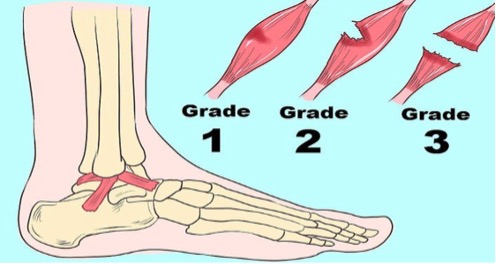
The three red bands you see on the outside of the ankle are the most commonly injured ankle ligaments when you roll your ankle inwards—which is the most common type of ankle sprain. 

The severity of the roll or twist determines how many ligaments are damaged and how badly your overall ankle sprain is. As shown in the diagram above, the different grades indicate the different severities of an ankle sprain. 

Sprained ankle treatment

Unfortunately what happens quite often, is people are given poor advice and education regarding the management of ankle sprains.

If you sustain an ankle sprain, the first thing you should do is call your physiotherapist. It’s important to receive proper guidance early on in the injury to ensure the necessary next steps are taken. 

How we treat ankle sprains

At ISO Physiotherapy, we are well accustomed to treating ankle sprains of different severities.

We suggest using the POLICE acronym immediately: Protect, Optimally Load, Ice, Compression and Elevation. This will ensure you get your ankle back to its full mobility as soon as possible. 

Then, we suggest coming into the clinic to have your ankle assessed so that, if necessary, appropriate rehabilitation can begin. This will consist of regaining your range of motion, ankle stability, ankle strength and normal daily functioning; and is for both those people who want to return to sport ASAP or would like to simply heal their ankle sprain.

Why is rehabilitation important for ankle sprains?

Every ankle sprain is different, no matter how minor; which is why so many variables are taken into account when planning your rehabilitation. Unfortunately many people choose not to have their ankle sprain properly rehabilitated which often leads to many instability-related complications in the future. We see this happen time and time again, so if you have sustained an ankle sprain recently, please contact us and one of our physiotherapists would be happy to discuss the appropriate next steps with you.


 

Mythbusters

Hi everyone!

We thought it was about time we sent out our new blog! It’s a good one!

Some of the biggest mythbusters in Physiotherapy that we see and hear almost every day!

“ My friend’s uncle’s partner told me I should get a scan”

Probably one of the most common phrases we see in the clinic as well as one of the most common questions is do we need to scan?

Scans form one piece of the puzzle which is sometimes necessary and sometimes not at all! Your physiotherapist will conduct a thorough assessment of your injury and determine whether or not imaging is a necessary piece. Fairly often it is not necessary at all!

“My brother went to a physio and they just did a massage”

Another very common misconception.
Physiotherapist’s use soft tissue therapy as a tool in their toolbox and in some cases form part of a treatment plan. Physiotherapist’s use a plethora of other tools to achieve a particular outcome which range from joint manipulation, soft tissue therapy, exercise rehabilitation and many more!
In short, you will not just receive a massage!

“My best mate had surgery for the same thing and he told me it was the only option”.

We see this all the time- people coming into the clinic with an expectation that surgical intervention is the only real way to cure their problem.
Now, disclaimer: there are certain scenarios where a surgical review is certainly necessary and we are not discouraging this. Each case is taken on its merit and will be referred to a surgeon when and if appropriate.
Now the list of this misconception is that each case needs to be taken on its own merit! No two injuries are the same because no two individuals are the same. Your physiotherapist here at ISO Physiotherapy will perform a very thorough assessment and provide the most up to date and evidence based recommendation about the best way to manage your condition. This may be non-operative rehabilitation!

“My cousin went to his physio and was given a couple of exercises and it didn’t really help so I just never went back”

I’ve saved one of the best for last! A controversial one!
Now, the physiotherapy profession is certainly shifting towards more of an exercise-based rehabilitation as opposed to hands on therapy as more evidence about the best way to manage conditions comes to light.

If you found that an exercise or two didn’t help, there can be multiple reasons. I usually find that it either wasn’t explained very well, the patient didn’t do the exercise as prescribed or the physiotherapy didn’t do a good enough job explaining the purpose and how it would help improve symptoms.

Here at ISO Physiotherapy, we pride ourselves on our communication skills and ability to convey information in a simple yet meaningful way to the patient. Exercises that we prescribe here at the clinic are tailored specifically to the individual and are selected according to the patient and their condition. Remember, no two people and no two injuries are the same.
So, feel at ease knowing that the exercises you leave here with will be explained thoroughly and will have meaning to you!

That’s all for now!
If you need us – you know where we are 🙂 Yours in physiotherapy,
The ISO Team!


When and Why Should You See a Physiotherapist?

Hi everyone!

Today’s blog is not going to be about a specific injury or condition, but rather an informative insight into when and why you should come see us.

Whenever I see patients, the first question I always ask is “have you been to a physiotherapist before?”. Unsurprisingly, at least 20% of the time, the answer is “no” followed by a self-admission of either being nervous because they’ve heard we “manipulate” the body or acknowledge that they “think we just give a good massage”.

So what is a Physiotherapist?

A Physiotherapist is an expert in the human body and its movement. A physiotherapist works with all ages to diagnose and treat a broad range of health conditions including sports related injuries, musculoskeletal conditions and chronic health conditions. Physiotherapists are also highly trained and skilled in managing a broad range of chronic general, neurological and respiratory conditions such as obesity, stroke and COPD.

A physiotherapist studies either a 4 year university degree at Bachelor level or a 2-3 year degree at postgraduate or doctoral level.

So do you still just give a massage or manipulate the body?

In a private practice setting, physiotherapists have a variety of tools and treatment modalities that they can utilise to achieve a treatment effect. In our clinic, our physiotherapists are trained in manual therapy and exercise prescription. Our physiotherapists have also obtained extra qualifications to perform Dry Needling.

So yes, we do in a sense ‘manipulate’ the body, but through very fine controlled movements without the large ‘thrust’ and ‘click’ that you might be accustomed to hearing about.
Similarly, we do perform a range of different massage techniques depending on what is required for the particular injury/condition.

A list of the main treatment modalities that we offer are listed below:

  • Manual therapy (joint mobilisations, soft/deep tissue massage, massage for swelling management)
  • Condition-specific exercise prescription
  • Acute and chronic injury management
  • General strengthening programs
  • Chronic disease management
  • Dry Needling
  • EMG muscle stimulation (if required)

    If you have any questions about any of the treatment techniques we offer, please don’t hesitate to ask!

    So will I leave the clinic with a diagnosis?

    We pride ourselves on accurate diagnosis and suitable treatment dependent on that diagnosis. Sure enough, you will leave the clinic with an accurate and easy to understand message on what the problem is and what we need to do about it!

    How do I know if I need to see a physiotherapist and not a GP?

    Many people are referred to us by GP’s for ongoing management and we refer the other way. Whether you see a physiotherapist or a GP first, if the condition can be managed by a physiotherapist you will be referred to us!

    Rest assured, if you haven’t seen a GP and you present to us first, if for whatever reason one of our physiotherapist’s feel that a medical opinion is necessary, we will certainly indicate that to you in your initial consultation! We are very transparent with our patients and if you indicate to us that you are experiencing any red flag symptoms (sudden weight loss, unremitting night pain, severe pain at rest, non-musculoskeletal patterning) we will refer you to the appropriate practitioner.

    Do I need a referral to come see a physiotherapist?

    No referral is required but if you have had any recent imaging to the area, please bring along the scan report and images so that it can form part of our physiotherapists clinical picture!

    So there you have it, if you need us, you know where to find us! If you still have more questions or aren’t sure about whether to see a physiotherapist, please call the clinic and ask to speak to one of us!

    Yours in Physiotherapy,

    ISO Physiotherapy


What Are Shin Splints?

‘Shin Splints’

So, you’ve decided to take up running during COVID19. You saw some running challenges going viral, or maybe your mates have decided to challenge each other with the best running times. You see they’ve been running anywhere from 4-10kms. You got up off the couch, bought some ‘running shoes’ and started your running journey. You were doing well for a couple of runs, even matching your mates times. You were probably on your fifth or sixth run and started to feel pain in your shin/s. You thought you could shake it off, but the more you ran, the worse it got. Then you rested for a few days, tried again, same thing again. It’s the height of your frustration.

Does this sound familiar?

You could have the age old ‘shin splints’.

What are Shin Splints?

If we’re being super picky about it, the actual term ‘shin splints’ is more of an overarching term that encompasses a variety of different pathologies along the length of the tibia. These pathologies can include injuries to the surrounding tendons, the tissue near the bone itself or on the actual bone. The actual medical term for shin splints is Medial Tibial Stress Syndrome but shin splints has become colloquial for these injuries mentioned above.

The most typical form of shin splints presents as pain/discomfort along the final 1⁄3 of the tibia (shin bone).

The Stress Continuum

Remember my story above, our typical couch to 10km runner with no middle ground, this is our typical scenario. Shin splints occurs when there is overstress or overloading to the shin bone beyond what it can normally tolerate and without progressive introduction of this load.

Shin splints are part of what’s called a ‘continuum’. The shin gets loaded with a normal level of stress, then it gets overloaded, then it gets overloaded even more, then it eventually forms a stress fracture. People can move back and forth from stage to stage (besides the fracture stage), and generally we tend to see people in the clinic who are early along this continuum, with only a small to moderate amount of discomfort. On occasion, we do see the far end of the spectrum where the overload has progressed beyond the failure point leading to a stress fracture.

What could cause such an injury?

There are some pretty common things that we expect to see when a patient presents to us with shin splints, and these are all indicative in the story you tell us. Most often, the things that can cause shin splints include:

  •  Tight and/or weak calves
  •  A recent sudden spike in training load (like our couch runner)
  •  Hill running
  •  Inappropriate footwear and/or flat feet
  •  Overweight

Are you sure it’s actually Shin Splints?

Well, pop down to our clinic and we’ll tell you 😉

We look for specific signs and symptoms to diagnose Medial Tibial Stress Syndrome. These include: pain on the inside and bottom part of your shin bone, significant tenderness over a portion of the shin bone, pain during and after a run, in more severe cases- pain before/during/after a run and pain at night and lastly pain when hopping.

N.B: these are generalised signs and symptoms which are known to be associated with Medial Tibial Stress Syndrome. Please see your physiotherapist for an accurate assessment and proper diagnosis to ensure these symptoms are not related to something other than what is presented in this blog.

How do we fix it?

We look at a bunch of different things to help address this injury. They will all be dependent on your own personal circumstances and goals!

More broadly, things that we generally look to address are: load management/activity modification, addressing any causative factors (flat feet, footwear, muscle strength imbalances, joint stiffness, muscle tightness) as well as a gradual and monitored return to running program.

So, if this is you- head on down to our trusted physio clinic in Bondi and we’ll get you running pain-free again!

Yours in health, ISO Physiotherapy